
The Move-In Inspection Checklist Every Broward County Landlord Should Complete
A property owner friend of mine in Fort Lauderdale called me, she was frustrated and looking for advice (her full time gig is managing her rentals, that is why I don’t manage them…yet). A tenant was moving out after two years, and the property had some real damage: a broken interior door, stained carpet in the master bedroom, and a bathroom vanity that had been cracked at some point during the tenancy.
The owner wanted to make deductions from the security deposit to cover the repairs. The tenant disputed every single item, claiming all of it was pre-existing.
Unfortunately, she had no move-in inspection report, no dated photographs, and nothing signed by the tenant documenting the condition of the property when they took possession. Two years of he-said-she-said with no documentation to anchor the conversation to.
That dispute ended the way most undocumented ones do. The owner recovered far less than the repairs actually cost, and the experience left them with a hard lesson about something that takes about 45 minutes to do right.
In Florida, move-in inspection is the foundation of every legitimate security deposit claim you will ever make, and skipping it or doing it casually is one of the most common and costly mistakes I see landlords make across Broward County.
Key Takeaways for Fort Lauderdale Rental Property Owners:
A thorough move-in inspection creates the documentation needed to support legitimate security deposit deductions.
Photos, videos, and signed inspection reports significantly reduce disputes at move-out.
Documenting existing wear protects both landlords and tenants by establishing a clear baseline.
Consistent inspection procedures are one of the simplest ways to reduce legal and financial risk.
Why Florida Law Makes This A Best Practice
While Florida law does not require landlords to complete a move-in inspection, documenting the property's condition at the beginning of the tenancy is one of the most effective ways to support any future security deposit deductions under Florida Statute Chapter 83. Under Florida Statute 83.49, landlords have either 15 or 30 days after a tenant vacates to either return the security deposit in full or provide written notice of any intended deductions with an itemized statement of the damages and their costs.
If a landlord fails to meet those notice requirements, they may forfeit their right to claim any portion of the deposit at all, even when the damage is real, documented after the fact, and genuinely the tenant's responsibility.
Florida law also updated back in 2025 to introduce a monthly non-refundable fee alternative to traditional security deposits under Florida Statute 83.491, which some owners are now offering as a leasing incentive.
Regardless of which structure you use, the move-in inspection should not be overlooked and a part of the process. You will always need a documented baseline of the property's condition at the start of the tenancy, because without it, any claim you make at move-out is your word against the tenant's, and in a Florida small claims court, the burden of proof sits with the landlord.
What I tell owners is that the inspection report is not just protection against a bad tenant. It protects you against a good tenant too, because good tenants sometimes dispute charges they genuinely believe are unfair, and a signed inspection report with dated photographs is what resolves that conversation quickly and cleanly without involving an attorney or a courtroom.
When to Conduct the Inspection and Who Should Be There
The inspection happens on the day the tenant takes possession. Not the day before, not a week earlier during make-ready. The day the keys are handed over, before a single box comes through the door.
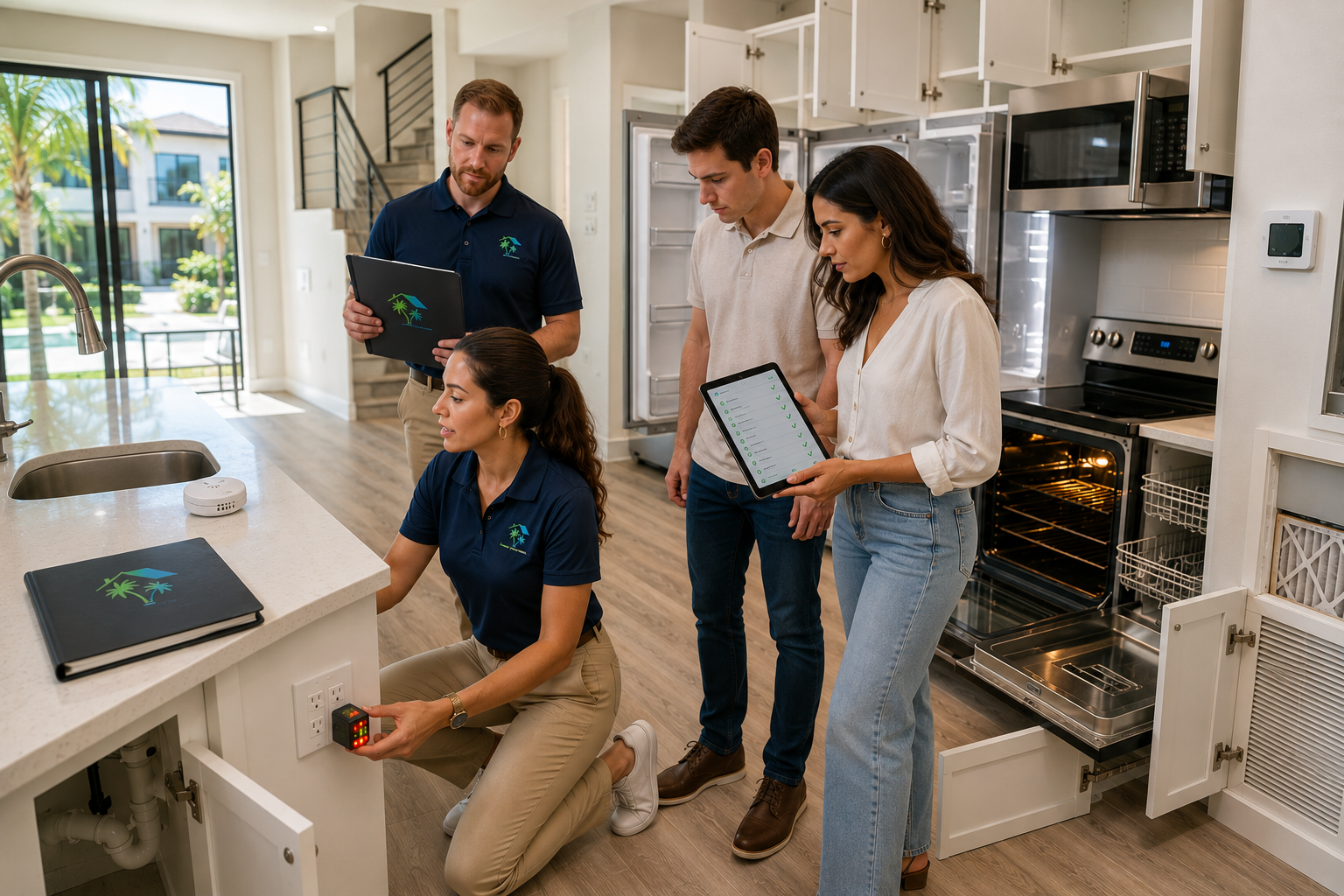
My strong advice is to do this inspection with the tenant present. Walk through the property together, document everything in front of them, and have them sign the same report you're signing. When a tenant has seen the condition of the property with their own eyes and acknowledged it in writing, the move-out deposit conversation looks completely different. Most disputes don't even start because there's nothing to argue about.
If they can't make it, do the inspection anyway, document everything thoroughly, and send them a copy right away with a request for their signature. Don't skip it just because they're not there.
What the Inspection Should Actually Cover
The mistake I see most often isn't skipping the inspection. It's rushing through it and missing things that come back to bite you at move-out. Go room by room, take written notes, and photograph everything. Here's what to cover:
✔ Exterior
✔ Kitchen
✔ Bathrooms
✔ Bedrooms
✔ HVAC
✔ Windows
✔ Garage
✔ Pool
✔ Appliances
✔ Smoke Detectors
✔ Carbon Monoxide Detectors (if applicable)
✔ Mailbox
✔ Keys
✔ Remotes
Exterior. Start outside. Front door, hardware, locks, exterior paint or stucco, driveway, parking, fencing, and landscaping all get documented before you step inside.
South Florida's climate is harder on exteriors than most markets. UV exposure, humidity, and seasonal weather create surface deterioration that compounds over a two-year tenancy, and the difference between what was pre-existing and what the tenant caused becomes genuinely difficult to establish without baseline documentation from day one.
Kitchen. Open everything and photograph what's inside. Oven interior, refrigerator shelves and drawers, dishwasher. Document countertops, cabinet faces, hinges, sink, faucet, and flooring condition.
In older Fort Lauderdale inventory, and there's a significant amount of it in neighborhoods like Coral Ridge, Victoria Park, Rio Vista and Wilton Manors (I’d even throw Oakland Park in there) where much of the stock dates to the 1960s and 70s, you're frequently dealing with functional but aged finishes
Document that condition honestly and specifically. A cracked refrigerator shelf and a loose cabinet hinge noted at move-in are the details that close down a tenant's pre-existing damage argument at move-out before it gets started.
Bathrooms. Toilet, vanity, sink, mirror, tub or shower surround, grout lines, caulking, exhaust fan, and flooring. In South Florida specifically, grout and caulking deteriorate faster than most owners account for because of the sustained humidity.
Without a baseline photo clearly showing the condition of those surfaces at move-in, you're walking into a he-said-she-said situation at move-out that rarely resolves cleanly in the landlord's favor.
Bedrooms and Living Areas. Document walls thoroughly, noting scuffs, nail holes, paint condition, and any areas of wear. Be specific about flooring, whether tile, hardwood, vinyl plank, or carpet, and call out any existing staining, scratching, or pattern wear.
Check every window for frame condition and lock operation. Note closet doors and tracks, ceiling fans, light fixtures, and baseboards. If the property has impact windows, and the majority of Fort Lauderdale rentals do or should at this point, test and document them specifically.
They're among the most expensive items in the unit to repair or replace and among the most commonly overlooked on a move-in inspection.
HVAC. Give this its own section on your inspection form because it deserves it. HVAC is the number one maintenance call across South Florida rentals, full stop. Document the last service date, the condition of the air handler, filter condition, and confirm the system is cooling effectively at the time of move-in.
If airflow feels restricted or the system is running but not performing the way it should, note it. A tenant who inherits an underperforming system and later gets presented with a repair bill is going to dispute it, and without move-in documentation establishing the system's baseline condition you have a weak position going into that conversation.
Everything Else. Laundry connections or equipment, water heater age and condition, garage door and opener operation, outdoor spaces including patios, balconies, and storage areas, and all exterior lighting all need to make it onto the inspection form.
These are the items that get skipped most often and that generate the most avoidable disputes, precisely because nobody thought to document them when the tenancy started.
If the property has a pool, document its condition and equipment status as well. In Fort Lauderdale, pool maintenance responsibility is one of the most common friction points between landlords and tenants, and the inspection is where you establish the baseline that every future conversation about pool condition refers back to.
Document Everything with Photos and Video
In my experience, the inspection reports that hold up best when a dispute reaches a courtroom or mediation are the ones supported by clear, well-lit, dated photographs that leave no ambiguity about what was being documented and when.
Every room should be photographed from multiple angles. Every item noted on the written report should have a corresponding photo. Damage or pre-existing wear items should be photographed in close-up with something in the frame to provide scale when relevant.
The date and time stamp on photographs matters, which is why it's worth verifying that your phone's camera is set to embed metadata in the image files rather than relying on the file creation date alone.
A brief video walkthrough of the property conducted on the same day as the written inspection adds another layer of documentation that is increasingly useful if a dispute reaches the point of litigation.
Video is harder to dispute than still photos because it captures the property in sequence and in context, and courts in Florida have become increasingly comfortable with video evidence in landlord-tenant matters.
Complete a Detailed Written Inspection Report
The inspection documentation needs to exist as a physical or electronic document, not just a collection of photographs. The written report should identify the property address, the date of the inspection, the names of everyone present, and a room-by-room description of the property's condition at the time of move-in.
Each item noted should describe the condition specifically rather than generically. "Minor scuff on interior of bedroom door at approximately waist height" is useful documentation. "Door: OK" is not.
Both the landlord and the tenant should sign and date the completed report, and each party should retain a copy.
The move-in inspection is just as important as placing the right tenant in the first place.
If you're managing the inspection digitally, using a platform that timestamps the document and records electronic signatures is worth the investment because it eliminates any question about when the report was completed and whether the tenant actually acknowledged it.
What Happens at Move-Out When You've Done This Right
When a tenant moves out of a Fort Lauderdale property and you have a thorough move-in inspection report, dated photographs, and a tenant signature on file, the move-out process is fundamentally different from what it would be without that documentation.
You conduct the move-out inspection using the same format as the move-in, compare the two reports side by side, and make deduction decisions based on a clear documented baseline rather than memory or estimation.
When legitimate deductions exist, your itemized statement to the tenant is supported by documentation they signed at the beginning of the lease. That documentation doesn't eliminate every dispute, but it eliminates the disputes where a tenant's only defense is claiming that damage was pre-existing.
If they signed an inspection report at move-in noting the carpet was in good condition, and the carpet requires replacement at move-out, the pre-existing defense doesn't hold.
In my experience, the landlords who have the fewest security deposit disputes are not the ones with the best tenants. They're the ones with the most thorough documentation, and that documentation starts on move-in day before the tenant brings in the first box.
The Bottom Line...
A move-in inspection takes less than an hour to complete properly. What it prevents can save you thousands of dollars and weeks of frustration at the end of a tenancy.
If you're managing a Fort Lauderdale rental yourself, build the move-in inspection into your leasing process as a non-negotiable step. The tenants who cause the most damage are rarely the ones who announce themselves at the application stage. They're the ones who seemed perfectly fine at move-in, and the inspection report is the only thing standing between their version of events and yours when the tenancy ends.
Common Questions From Fort Lauderdale Rental Property Owners:
Is a move-in inspection required for rental properties in Florida?
Florida law does not specifically require landlords to perform a move-in inspection. However, documenting the property's condition before a tenant moves in is one of the best ways to support legitimate security deposit deductions and reduce disputes at move-out.
What should be included in a move-in inspection checklist?
A thorough move-in inspection should document every room and major system in the property, including walls, flooring, appliances, windows, doors, bathrooms, HVAC equipment, exterior areas, and any existing damage or wear. Dated photographs and written notes should accompany the inspection.
Should tenants sign the move-in inspection report?
Yes. Having both the landlord and tenant sign the inspection report creates a documented record of the property's condition at the beginning of the lease and helps prevent disagreements when the tenancy ends.
Are photos and videos important during a move-in inspection?
Absolutely. Every room should be photographed from multiple angles, and any existing damage or wear should be clearly documented. A video walkthrough provides additional context and can be valuable if a dispute arises over the property's condition at move-out.
How does a move-in inspection help protect a landlord's security deposit claim?
A detailed move-in inspection establishes the property's condition before the tenant takes possession. When paired with a signed inspection report and dated photographs, it provides the documentation needed to support legitimate security deposit deductions if damage occurs during the tenancy.
.png)