
What to Do When a Tenant Stops Paying Rent in Florida?
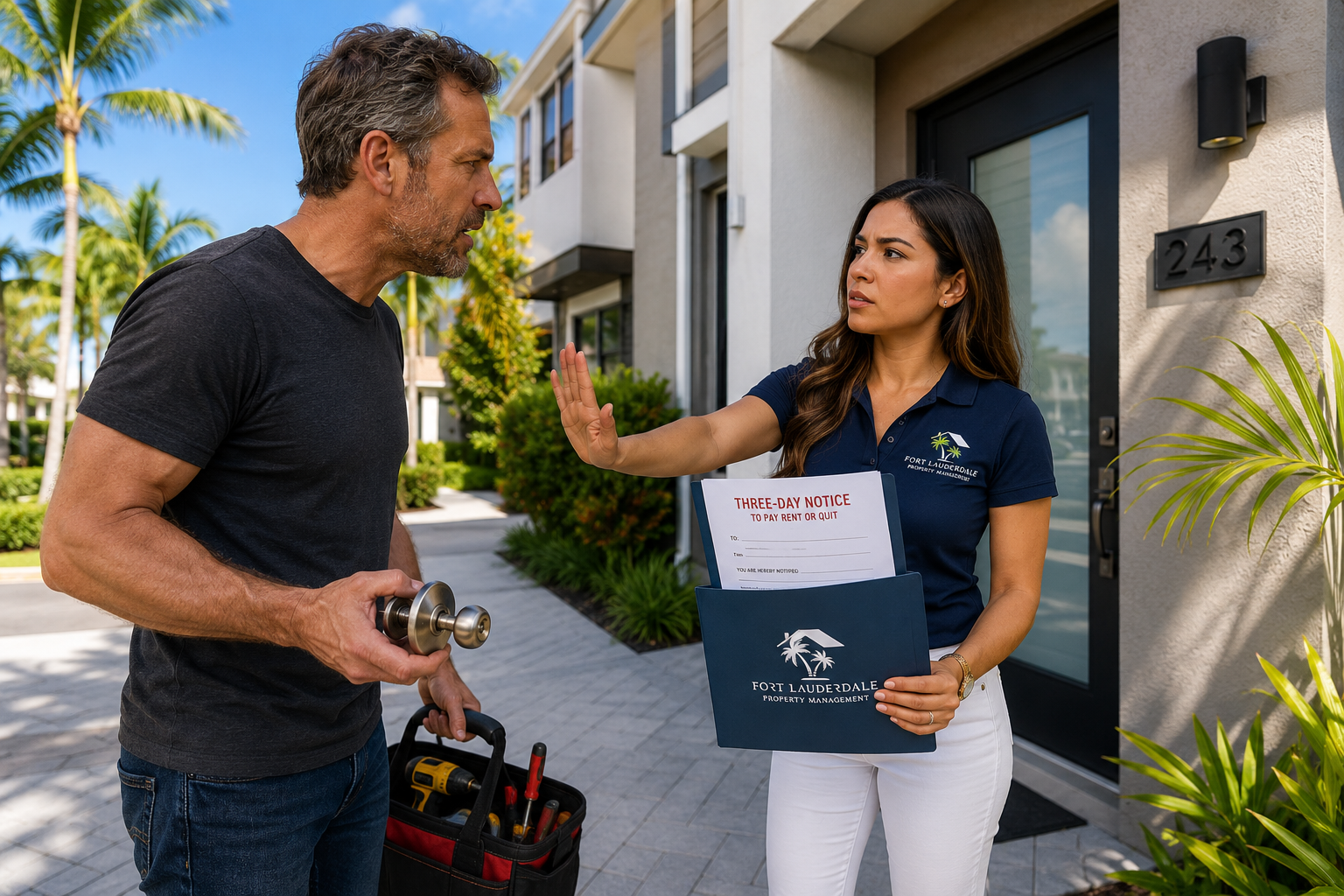
Not too long ago, I had an Oakland Park property owner call me on the fourth of the month, already worked up because rent hadn't come in yet, wanting to know if he could just go over there and change the locks that afternoon.
He'd had a bad run with a previous tenant a couple years earlier and he was determined not to let it drag out again.
I talked him down and walked him through what actually needed to happen instead, and by the end of the call he was a lot calmer, mostly because he finally had an actual plan instead of just frustration.
That reaction is completely understandable, because a missed rent payment is stressful and it hits your bottom line immediately.
But it's also exactly the moment where Fort Lauderdale and Broward County landlords get themselves into legal trouble, because whether you own a Victoria Park duplex, a Coral Ridge condo, or an investment property in Oakland Park, Florida law is very specific about what you're allowed to do when a tenant falls behind, and it has almost no patience for landlords who try to shortcut the process, no matter how justified they feel in the moment.
So what should you do?
Key Takeaways for Fort Lauderdale Rental Property Owners:
Florida law requires landlords to follow a specific legal process before evicting a tenant for nonpayment of rent.
Before taking action, review your lease to confirm the rent due date, grace period, and any applicable late fee provisions.
A properly prepared Three-Day Notice must generally include only unpaid rent and follow Florida's statutory delivery requirements.
Accepting a partial rent payment without proper documentation may affect your ability to continue an eviction.
Florida strictly prohibits "self-help" evictions, including changing locks, shutting off utilities, or removing a tenant's belongings without a court order.
Maintaining thorough documentation and acting promptly can help protect your investment and reduce costly delays.
Start With the Lease, Not With Your Gut
Professional Property Management Services Overview
Before you do anything else, go back and look at what your own lease actually says about when rent is due and what happens if it's late.
Florida doesn't require a grace period before you can act, but if your lease promises one, you're bound by it, so check that first.
Confirm the actual due date, confirm whether a late fee has kicked in yet according to your own terms, and make sure you have this all straight before you send anything to the tenant.
Florida Security Deposits Explained: Rules Every Fort Lauderdale Landlord Should Know
A landlord who acts too fast, before their own lease terms have technically been triggered, ends up handing the tenant an easy defense later.
Serve the Three-Day Notice, and Get the Wording Exactly Right
Once rent is genuinely late under your lease, the next legal step is serving a written notice giving the tenant three days to either pay the full amount owed or move out. It's required under Florida Statute 83.56 before you're allowed to file for eviction.
A few details here matter more than people expect.
Those three days only count business days, so weekends and Florida legal holidays don't count toward the total, and the day you actually deliver the notice doesn't count either.
The notice also has to state only the exact amount of unpaid rent, nothing else. If you fold in late fees, unpaid utilities, or anything beyond the base rent itself, the notice becomes defective and a court can throw out the whole eviction on that basis alone, which means starting the entire process over from scratch.
It has to be delivered properly too, whether that's handing it to the tenant directly, leaving it with another adult in the unit if the tenant isn't there, or posting it on the door and mailing a copy if nobody answers. Emailing or texting it isn't good enough on its own (unless you have the specific addendum with the tenant agreeing to it in your lease). Because eviction procedures can be highly technical and court requirements may vary by county, landlords should consult a qualified Florida attorney when preparing or serving a Three-Day Notice.
I know this feels incredibly frustrating. Someone owes you money and the last thing you want is another piece of paperwork. But I've seen landlords lose weeks—or even months—because they tried to skip one step. Getting the notice right the first time is genuinely one of the cheapest things you can do to protect yourself.
Be Careful Before Accepting a Partial Rent Payment
If you accept a partial rent payment after you've already served the three-day notice, you can end up waiving your right to evict over that unpaid balance, even if the tenant still owes you real money.
Florida law does allow you to accept partial rent without giving up your rights, but only if you handle it correctly and document that you're reserving your right to still pursue the remaining balance.
If you're not sure how to do that properly, give a quick call to an attorney before you take any partial payment, because getting this wrong can cost you the whole case.
If the Tenant Still Doesn’t Pay, You Can File for Eviction
If the notice period runs out and the tenant hasn't paid in full or moved out, you're now able to file an eviction complaint with the Broward County Court ( or the county where your rental property is located). This starts the formal court process, and the clerk will issue a summons requiring the tenant to respond within five business days.
If the tenant wants to fight the eviction and raise any kind of defense, Florida law requires them to deposit the disputed rent into the court registry within that same five-day window, and to keep depositing rent as it continues to come due.
A lot of tenants who are genuinely behind on rent simply can't come up with that deposit, which is why a large share of nonpayment cases end in a fairly quick default judgment in the landlord's favor if the tenant doesn't respond or doesn't pay into the registry.
An uncontested case like this typically wraps up in around four to five weeks from the point you file. If the tenant does contest it, expect the timeline to stretch out considerably longer, so it's worth setting your expectations accordingly rather than assuming this will resolve overnight. Eviction timelines can and will vary depending on court schedules, whether the tenant contests the eviction, and the county where the property is located.
Whatever You Do, Don't Take Matters Into Your Own Hands
I want to be direct about this part because it comes up more than you'd think. Florida law absolutely prohibits self-help evictions, meaning you cannot change the locks, remove the tenant's belongings, shut off utilities, or do anything else designed to force someone out without going through the court process. It doesn't matter how far behind they are on rent or how frustrated you've become. If you go this route, you're exposing yourself to real financial liability, including damages that can end up costing you far more than the unpaid rent ever did, plus the tenant's attorney's fees on top of that.
I understand why this is tempting when someone hasn't paid you in weeks and isn't communicating, but the courts in Florida enforce this rule aggressively, and it's simply not worth the risk. The formal process might feel slower than you'd like, but it's the only path that actually protects you.
A Few Habits That Keep This From Turning Into a Bigger Mess
Keep a clean paper trail from the very first missed payment. Save any texts, emails, or calls where the tenant explains what's going on, and note the dates.
What Happens During the First 30 Days of a New Tenancy? A Broward County Landlord's Guide
This record becomes valuable if the case ends up in court and the tenant tries to claim they never got proper notice or that the situation played out differently than it actually did.
Don't wait around hoping the tenant catches up on their own before you act. Every extra week you wait to send the three-day notice is another week of unpaid rent, and it doesn't buy you any legal advantage. One of the biggest mistakes I see is landlords waiting because the tenant promises they'll pay "next Friday." Sometimes they do. More often, they don't. The legal process doesn't prevent you from working something out later, but waiting to start it almost always costs you time and money.
Why Good Tenants Leave Good Rental Properties
The eviction itself usually isn't what costs landlords the most money. Waiting too long to start the legal process is.
If the situation feels complicated at all, whether that's a tenant threatening to fight it, a dispute over how much is actually owed, or anything that doesn't feel like a straightforward case, it's worth bringing in an attorney who handles Florida evictions regularly rather than trying to wing it yourself.
The cost of getting professional help upfront is almost always smaller than the cost of a dismissed case that has to start over from the beginning.
The Bottom Line…
A tenant who stops paying rent is stressful, and it's completely normal to feel your temperature rise when it happens. But the Fort Lauderdale and Broward County landlords who handle it well are the ones who let the process do the work instead of their emotions.
Check the lease, serve the notice properly, be careful about partial payments, let the court process run its course if it comes to that, and never try to force someone out yourself.
Follow that sequence and you'll come out the other side with your investment protected and your legal footing solid, even if the tenant never pays another dollar.
If you'd rather avoid navigating missed rent payments, legal notices, and eviction procedures on your own, learn how our Professional Property Management Services Overview can help protect your investment while reducing day-to-day stress.
Common Questions from Fort Lauderdale Rental Property Owners:
Can I change the locks if my tenant doesn't pay rent?
No. Florida law generally prohibits landlords from changing the locks, shutting off utilities, removing a tenant's belongings, or otherwise forcing a tenant out without first obtaining a court order. These "self-help" evictions can expose landlords to significant financial liability. The safest approach is to follow Florida's legal eviction process from start to finish.
How many days does a tenant have to pay rent after receiving a Three-Day Notice?
A Florida Three-Day Notice generally gives the tenant three business days to either pay the full amount of unpaid rent or vacate the property. Weekends, legal holidays, and the day the notice is served are typically not counted when calculating the deadline.
Can I include late fees on a Florida Three-Day Notice?
Generally, no. A Three-Day Notice for nonpayment of rent should typically include only the unpaid rent owed. Including late fees, utilities, or other charges may make the notice legally defective and could delay the eviction process. Because eviction requirements can be highly technical, landlords should consult a qualified Florida attorney when preparing or serving legal notices.
What happens if my tenant makes a partial rent payment?
Accepting a partial rent payment may affect your ability to continue an eviction if it is not handled properly. Before accepting a partial payment after serving a Three-Day Notice, landlords should understand the legal consequences and consult a qualified Florida attorney if they are unsure how to proceed.
How long does the Florida eviction process usually take?
Every case is different, but an uncontested eviction for nonpayment of rent may be resolved in approximately four to five weeks after filing. If the tenant contests the eviction or court schedules are delayed, the process may take considerably longer.
What should I do the first day rent is late?
Start by reviewing your lease agreement. Confirm the rent due date, whether a grace period applies, and whether the tenant has actually violated the lease. If rent remains unpaid after any applicable lease provisions have been satisfied, landlords should begin following Florida's legal process rather than relying on verbal promises or delaying action.
Can I evict a tenant immediately for not paying rent?
No. Florida landlords generally cannot immediately remove a tenant simply because rent is late. State law requires landlords to follow the statutory eviction process, beginning with serving a properly prepared Three-Day Notice before filing an eviction action with the court if necessary.
Should I hire a property manager if a tenant stops paying rent?
Many rental property owners choose to work with a professional property manager because missed rent payments often involve strict legal procedures, deadlines, and documentation requirements. An experienced Fort Lauderdale property manager can help reduce costly mistakes, coordinate with legal counsel when necessary, and keep the process moving while protecting your investment.
.png)